

Hybrid work didn’t just change where people work; it changed how they communicate.
Today’s business conversations span UCaaS platforms, contact centres, Microsoft Teams, Zoom, mobile devices, and legacy voice systems. Flexibility is now the norm. But with that flexibility comes increased compliance and governance complexity.
For organisations operating in regulated industries, compliance recording is no longer optional. Below are six reasons compliance-grade call recording has become a foundational requirement in the modern, hybrid workplace and why patchwork approaches no longer hold up.
1. Conversations Happen Everywhere, Not Just in the Contact Centre
Customer and internal conversations no longer occur in a single system.
They happen across:
- Contact centre environments
- Microsoft Teams meetings and chats
- Video calls and screen sharing
- Remote and mobile endpoints
Relying on native or siloed recording tools creates gaps in capture and inconsistent governance. Organisations increasingly need a platform-agnostic compliance recording approach that supports consistent capture and oversight across communication environments.
When platforms multiply, recording strategies must scale with them.
2. Compliance Is a Business Requirement, Not a Feature
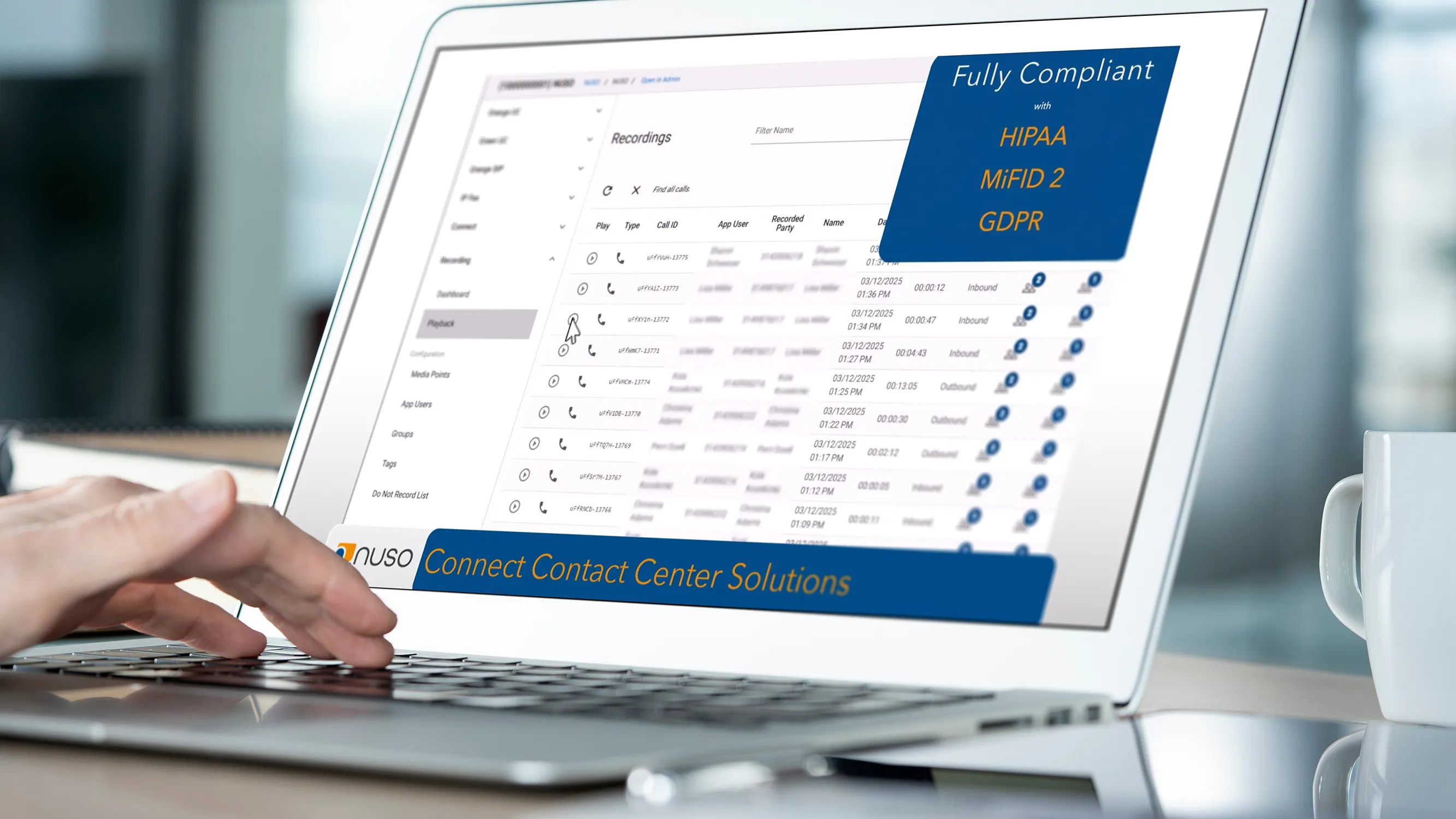
From GDPR and MiFID II to HIPAA and PCI-aligned frameworks, regulated organisations are expected to support the secure handling, retention, and auditability of regulated communications.
Non-compliance can expose organisations to:
- Regulatory penalties
- Legal and dispute risk
- Operational disruption
- Loss of customer trust
Compliance recording plays a key role in supporting these obligations by enabling consistent capture, secure handling, and retention aligned to regulatory and organisational policies.
3. Recording Supports Risk Management and Dispute Review
When questions arise, whether from customers, regulators, or internal stakeholders, having access to recorded interactions can be critical.
Compliance-grade recording supports:
- Review of customer disputes or complaints
- Audit preparation and internal investigations
- Operational and quality assurance workflows
Without consistent recording and governance practices, organisations increase exposure during audits and disputes. Recording is not about surveillance it is about risk awareness and accountability.
4. Native Recording Tools Weren’t Built for Compliance
Native recording features inside collaboration platforms prioritise convenience and collaboration not regulatory oversight.
They often lack:
- Policy-based capture across platforms
- Configurable retention controls
- Consistent access governance
- Cross-platform visibility
- Operational audit trails
A compliance-grade recording approach is designed to support regulated environments by applying consistent recording and governance principles, regardless of where conversations take place.
5. AI Turns Recorded Conversations into Operational Insight
Compliance may be the primary driver, but it is not the only benefit.
When recorded interactions are transcribed and analysed, organisations can:
- Identify training and coaching opportunities
- Detect emerging risk patterns
- Improve customer experience and service quality
- Support data-driven decision-making
AI-powered transcription and sentiment analysis enable teams to focus on what matters, without listening to hours of audio, while maintaining appropriate governance.
6. Compliance Responsibility Extends Beyond the Enterprise
For managed service providers, resellers, and technology partners, compliance outcomes matter too.
The solutions you recommend and deploy reflect on your credibility. Supporting customers with compliance-grade recording capabilities helps:
- Strengthen trust
- Reduce shared risk exposure
- Differentiate services in regulated markets
As hybrid communications continue to evolve, partners that take compliance recording seriously are better positioned to support long-term customer success.
The Risk of Ungoverned Interactions
Hybrid work has permanently expanded the communications landscape. As conversations span platforms, devices, and modalities, the risks of ungoverned interactions grow.
Compliance-grade call recording has become a core component of modern governance strategies not because organisations chose complexity, but because the way we communicate has changed.
Organisations that adopt a consistent, platform-agnostic approach to compliance recording are better equipped to reduce risk, support audits, and gain meaningful insight from the conversations that drive their business.
Note
NUSO Connect Recorder supports compliant recording, retention, and operational auditability. It is not an authoritative regulatory archive and may be integrated with third-party compliance archive platforms where required.